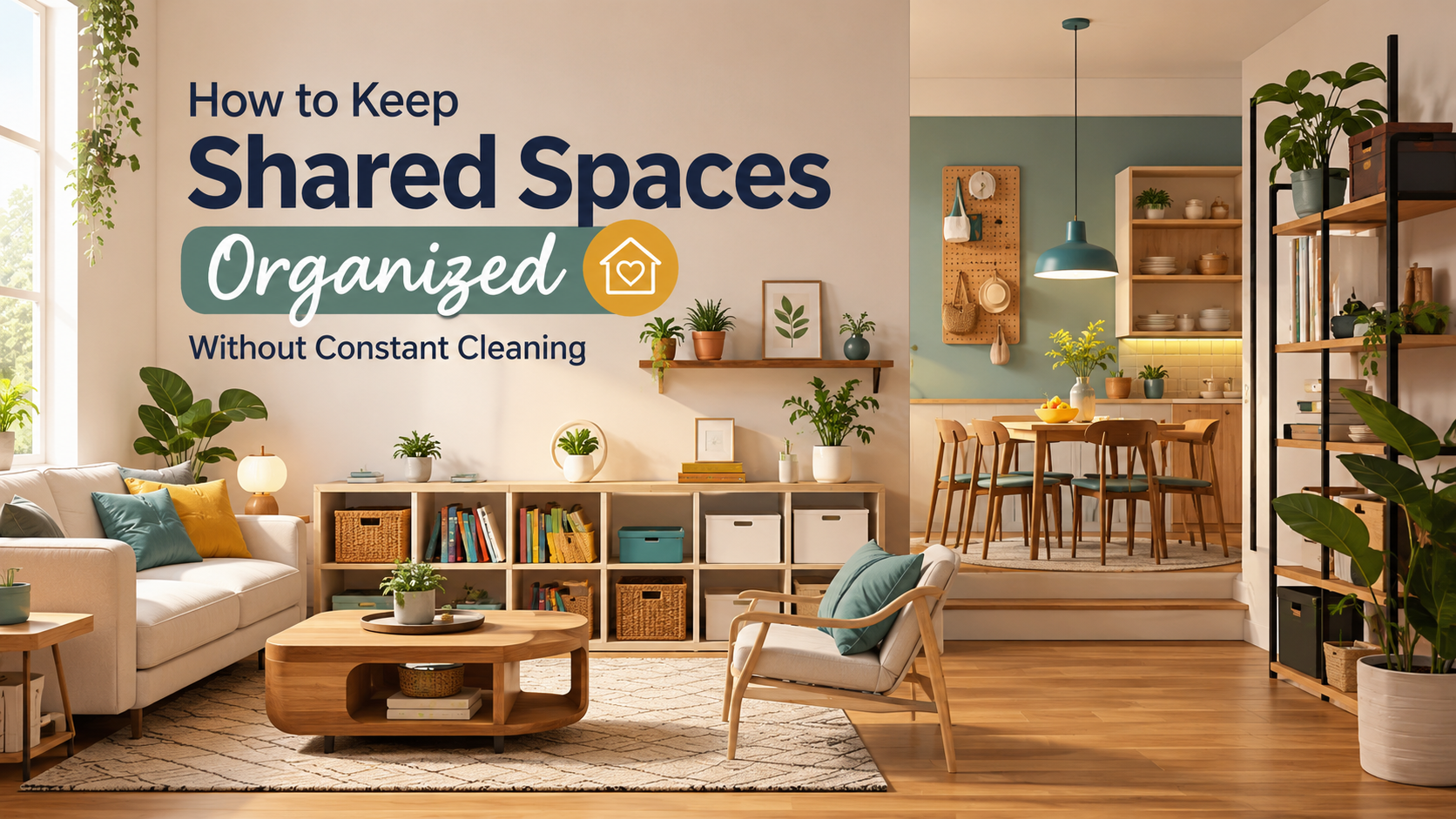
How to Keep Shared Spaces Organized Without Constant Cleaning
Shared living areas can stay neat without endless tidying. Small daily habits, smart storage, and clear routines make organization easier while reducing the need for frequent deep cleaning.
Keeping a home tidy becomes more challenging when several people use the same rooms every day. Kitchens, living rooms, bathrooms, and entryways often collect clutter quickly because everyone has different routines. Fortunately, how to keep shared spaces organized without constant cleaning is less about cleaning more often and more about creating systems that naturally encourage order.
Instead of spending hours putting things away every weekend, focus on practical organization methods that help every household member contribute. A few thoughtful adjustments can reduce mess, simplify maintenance, and make shared areas more enjoyable for everyone.
Why Shared Spaces Become Cluttered So Quickly
Most clutter appears because everyday items don’t have a designated home or because people postpone putting things back. Shoes stay near the door, dishes remain on tables, bags pile up on chairs, and mail collects on counters. These small habits slowly create larger messes.
Rather than relying on frequent cleaning sessions, identify the source of recurring clutter and make it easier to return items immediately after use.
How to Keep Shared Spaces Organized Without Constant Cleaning
Create Clearly Defined Storage Zones
Assign every frequently used item to a specific location. Remote controls belong in one basket, blankets stay inside one storage bin, shoes go onto a rack, and reusable bags hang near the entrance. When everyone knows where items belong, cleanup becomes automatic.
Keep Everyday Essentials Accessible
Frequently used belongings should be easy to reach. If storage is inconvenient, people naturally leave items on tables or counters. Open baskets, labeled containers, and simple shelves encourage consistent organization.
Reduce Visual Clutter
Minimal surfaces appear cleaner even when they require little maintenance. Keep only useful or decorative essentials on countertops, coffee tables, and entry consoles while storing everything else nearby.
Simple Daily Habits That Prevent Big Messes
Daily routines don’t need to be complicated. Small actions completed throughout the day prevent clutter from building into overwhelming cleaning tasks.
- Return items immediately after use.
- Empty bags and backpacks each evening.
- Sort incoming mail once instead of creating piles.
- Wipe kitchen counters after preparing meals.
- Spend five minutes resetting the living room before bedtime.
Step-by-Step Organization Plan
- Identify the areas that become messy most often.
- Remove unnecessary or duplicate items.
- Assign permanent storage for frequently used belongings.
- Use labeled baskets, trays, or storage containers.
- Create simple household rules everyone can follow.
- Perform a quick five-minute reset each evening.
| Shared Area | Common Problem | Organization Solution | Maintenance Time |
|---|---|---|---|
| Living Room | Blankets and remotes everywhere | Storage basket and tray | 2 minutes |
| Kitchen | Counter clutter | Limit countertop items | 5 minutes |
| Entryway | Shoes and bags | Shoe rack and hooks | 3 minutes |
| Bathroom | Personal products | Labeled storage bins | 2 minutes |
| Dining Area | Mail and papers | Document organizer | 2 minutes |
Common Mistakes to Avoid
Many organization systems fail because they are too complicated. Avoid these common mistakes:
- Buying storage before removing unnecessary items.
- Creating storage that is difficult to access.
- Expecting perfect organization immediately.
- Leaving responsibility to only one household member.
- Ignoring small messes until they become overwhelming.
Quick Weekly Organization Checklist
- ✔ Return misplaced items.
- ✔ Empty catch-all baskets.
- ✔ Donate unused household items.
- ✔ Wipe high-use surfaces.
- ✔ Organize entryway.
- ✔ Restock frequently used supplies.
Helpful Resource: U.S. Environmental Protection Agency – Reduce, Reuse and Recycle
Frequently Asked Questions
How often should shared spaces be organized?
Small daily resets combined with one weekly organization session are usually enough to maintain tidy common areas.
What storage works best for families?
Open baskets, labeled bins, wall hooks, and simple shelves encourage everyone to return items quickly.
How can children help keep shared spaces clean?
Provide clearly labeled storage and teach simple cleanup routines that take only a few minutes.
Should every shared room have storage?
Yes. Convenient storage near where items are used makes organization much easier and reduces clutter.
Conclusion
Learning how to keep shared spaces organized without constant cleaning is about building practical habits instead of relying on frequent deep cleaning. Clear storage zones, daily five-minute resets, and simple organization systems help everyone maintain a tidy environment with minimal effort. By focusing on consistency rather than perfection, shared living areas remain welcoming, functional, and much easier to manage throughout the year.