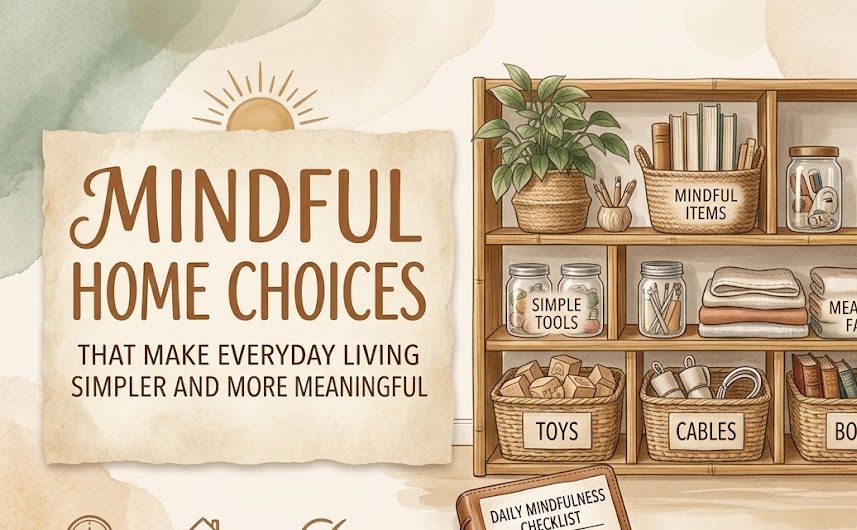
A meaningful home does not depend on having more space, more possessions, or a perfectly designed interior. It often begins with thoughtful choices that make everyday routines easier and help the people living there feel more connected to the space around them.
Modern life can make it easy to collect more things, create more routines, and fill every available moment with activity. At home, this can eventually lead to unnecessary clutter, complicated systems, and spaces that feel busy instead of comforting.
Mindful home choices offer a different approach. They encourage people to consider how a room, object, habit, or routine actually contributes to daily life. Instead of asking what else can be added, it can be helpful to ask what truly makes the home easier to live in.
This does not mean following a strict minimalist lifestyle or removing every decorative object. A meaningful home can be colorful, personal, and full of useful belongings. The difference is that the choices feel intentional. Each important part of the space supports comfort, function, memories, or everyday enjoyment.
Choose What Makes Daily Life Easier
A useful home choice should support the way you actually live. This might mean choosing a storage system that is easy to maintain, arranging furniture to improve movement, or keeping everyday items close to where they are used.
Sometimes homes become inconvenient because decisions are based only on appearance. A room may look attractive, but if frequently used items are difficult to reach or furniture blocks normal movement, the space can quickly become frustrating.
Mindful design considers both appearance and experience. A home should feel good to look at, but it should also make normal activities easier. Small practical improvements can often have a greater effect than expensive changes.
A thoughtful home choice is often one that continues to make life easier long after the excitement of the purchase or redesign has disappeared.
Keep Possessions Connected to Real Life
Every home naturally contains objects that are useful, sentimental, decorative, or connected to hobbies. Problems often begin when belongings accumulate faster than they can be used or appreciated.
A mindful approach does not require removing everything that is not essential. Instead, it can involve checking whether possessions still have a role in your current life. Some items may be useful every day. Others may hold important memories. Some may simply make the home feel more personal.
The goal is to create a relationship with belongings that feels intentional rather than automatic. When items have a clear purpose or meaning, it can become easier to organize the home and appreciate what is already there.
Useful
Supports everyday tasks and makes routines more convenient.
Meaningful
Connects to important memories, people, or experiences.
Enjoyable
Adds personality and makes the home feel more welcoming.
Create Routines That Reduce Unnecessary Decisions
Daily life often involves many small decisions. Where should this item go? When should this room be cleaned? What needs to be prepared for tomorrow? Too many repeated decisions can make simple household tasks feel more tiring than they need to be.
Simple routines can reduce this mental effort. A small evening reset, a regular place for important items, or a consistent laundry routine can make the home easier to manage without requiring a complicated schedule.
Simple Can Be More Powerful Than Perfect
A routine does not need to organize every minute of the day. It only needs to solve a problem that repeatedly creates stress, clutter, or unnecessary effort.
Make Room for Activities That Matter
Home is more than a place to store belongings. It is also where people rest, spend time with others, enjoy hobbies, and build everyday memories. A meaningful home should leave room for these experiences.
Consider whether the layout supports the activities that matter most. A comfortable chair may encourage more reading. A clear dining area can make shared meals easier. An organized desk may make it simpler to focus on creative or professional work.
These choices do not need to be large. Sometimes removing an unnecessary piece of furniture creates enough room for a useful activity. Other times, a small change in layout can make an underused part of the home more enjoyable.
Five Mindful Choices to Consider Around the Home
“`Simple systems are usually easier to maintain over time.
Good placement can reduce daily frustration and clutter.
Not every room needs to be filled with activity or possessions.
Value can come from usefulness, meaning, beauty, or personal enjoyment.
A good home should be flexible enough to support new routines and priorities.
Use Quiet Spaces Intentionally
A meaningful home does not need constant activity in every room. Having one calm corner or simple area can provide a welcome break from busy routines. This might be a comfortable chair near natural light, a quiet bedroom arrangement, or simply a clear area without unnecessary distractions.
These spaces can become more useful when they are protected from clutter. A quiet corner filled with random items may lose the sense of comfort it was meant to provide.
Creating visual simplicity can also help. Fewer objects, softer lighting, and a clear purpose can make a small part of the home feel noticeably different from a busier environment.
Less Rush
Create routines that allow everyday tasks to happen gradually instead of always becoming emergencies.
More Presence
Choose parts of the home that encourage rest, conversation, hobbies, and enjoyable moments.
Avoid Designing for an Imaginary Lifestyle
One of the most helpful mindful habits is designing the home for the life you have now rather than an imagined version of life. A room should support your real routines, interests, and needs.
For example, if a formal dining area is rarely used but you work from home every day, that space may serve you better as a flexible work area. If a large collection of decorative items makes cleaning difficult, reducing the number of displayed pieces may improve comfort without removing personality.
A home becomes more meaningful when it reflects real life. This does not prevent change or improvement. Instead, it helps ensure that each new choice begins with a practical understanding of what already works and what needs attention.
Living With Intention
A simpler home is not always the result of owning less. Often, it comes from making better choices about what deserves space, time, and attention.
Start with one area of everyday life that feels unnecessarily difficult. Look for a small change that can make the routine easier, more comfortable, or more meaningful. Over time, these thoughtful decisions can create a home that not only looks organized but also feels genuinely connected to the way you want to live.