Simple Systems • Easier Days
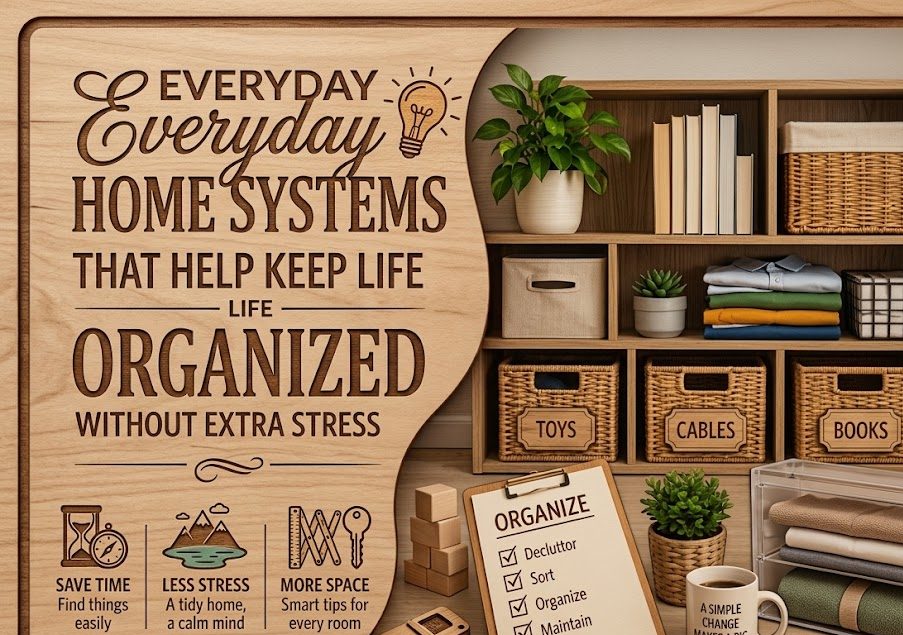
An organized home does not need complicated schedules or hours of daily work. A few simple systems can make everyday tasks easier, reduce repeated decisions, and help small responsibilities stay under control.
Less chaos.
More flow.
Good home systems should reduce stress, not create more rules to remember.
Keeping a home organized can feel difficult when every task depends on remembering what needs to be done. Laundry, dishes, paperwork, shopping, cleaning, and everyday belongings can all compete for attention. When these responsibilities are handled only after they become urgent, home life can start to feel more stressful than necessary.
A simple system can change that. Instead of relying on constant motivation, a system creates an easier path for common tasks. It gives items a regular place, connects small responsibilities to existing routines, and reduces the number of decisions that need to be made throughout the day.
The best home systems are usually not complicated. They are flexible enough to work during busy weeks and simple enough to continue even when life does not go exactly as planned. The goal is not to create a perfect household schedule. It is to make everyday life feel easier to manage.
Start With the Tasks That Repeat Most Often
A useful system usually begins with something that happens again and again. There is little benefit in creating an elaborate process for a problem that appears once a month. Focus first on the small tasks that regularly create clutter, confusion, or stress.
For example, if keys are frequently misplaced, create one convenient place for them near the entrance. If mail collects on the table, create a simple sorting location. If clothes repeatedly end up on a chair, place a laundry basket or storage solution where clothes are actually removed.
The best solution is often found by observing what people already do. Instead of creating a system that requires a completely new habit, adjust the environment so the desired action becomes easier.
01. Entry Routine
Create a regular place for keys, bags, shoes, and other items used when leaving or returning home.
02. Kitchen Reset
Handle a few small tasks after meals so they do not become a larger job later.
03. Evening Reset
Spend a few minutes preparing important areas for a more comfortable start the next day.
Make Important Items Easy to Return
Many organization systems fail because putting something away requires too much effort. A storage location may look attractive, but if it is difficult to open, located far from where the item is used, or too crowded to hold anything easily, people may stop using it.
Convenience is one of the most important parts of organization. Everyday items should have storage locations that are easy to access. A system does not need to be hidden behind multiple doors or arranged perfectly to be effective.
A practical question to ask
“Can this item be put away in a few seconds without moving several other things first?”
If the answer is no, the storage arrangement may need to change. A good system should make the correct action feel like the easiest action.
Use Short Resets Instead of Waiting for a Major Cleanup
One reason homes become difficult to organize is that small tasks are allowed to build until they require a large amount of time and energy. Short resets can help prevent this cycle.
A reset does not need to involve deep cleaning. It can simply mean returning visible items to their proper places, clearing one main surface, washing frequently used dishes, or preparing a room for the next activity.
After Work
Put away work materials and clear the space so personal time does not feel connected to unfinished tasks.
After Dinner
Handle the most visible kitchen tasks before relaxing for the evening.
Before Bed
Spend a few minutes returning the main living areas to a comfortable condition.
Create Simple Storage Categories
Storage becomes easier when items are grouped in ways that make sense. Instead of placing everything wherever there is room, create broad categories that are easy to remember.
For example, one area can hold cleaning supplies, another can hold documents, and another can contain household accessories. Inside these categories, smaller groups can be created when necessary.
Keep Categories Simple
- Daily-use items
- Cleaning and household supplies
- Documents and important papers
- Seasonal or occasional belongings
- Hobby and activity-related items
Overly detailed categories can become difficult to maintain. A broad system that everyone understands may work better than a complicated arrangement that only one person remembers.
Plan for the Places Where Clutter Naturally Collects
Almost every home has a few areas where clutter appears repeatedly. These locations are sometimes called drop zones. They may include an entrance table, kitchen counter, bedroom chair, or part of a desk.
Instead of repeatedly trying to stop clutter from appearing, it can be more effective to create a system specifically for that location. A small tray, basket, drawer, or nearby shelf may provide the missing place for items that regularly end up there.
This approach works because it responds to real behavior. The system is designed around the natural movement of daily life rather than expecting every person to remember an ideal process.
Five Everyday Systems Worth Trying
“`Keep the items used when leaving home in one convenient area.
Review common household items before they run out.
Choose a manageable schedule instead of waiting until clothing becomes difficult to sort.
Prevent important documents and everyday mail from spreading across the home.
Return the most visible spaces to a comfortable condition before the next day begins.
Keep Systems Flexible Enough for Real Life
A rigid system can sometimes create more stress than the problem it was designed to solve. Busy days, guests, work changes, and unexpected responsibilities can interrupt even the best routine.
Flexible systems allow the home to remain manageable without requiring everything to happen at exactly the same time. If a task is missed, the system should make it easy to continue rather than creating a feeling of failure.
For this reason, it can be helpful to avoid building too many rules into home organization. A few useful routines are often more effective than a long list of responsibilities.
Review What Is No Longer Working
Home systems are not permanent. A storage area that worked well a year ago may no longer suit current routines. New belongings, different work schedules, or changes in family life can all affect how a home functions.
Occasionally reviewing the systems that create frustration can prevent larger problems. If a drawer is always overflowing or a particular area is constantly messy, treat it as information. The current setup may simply need adjustment.
A More Comfortable Approach to Organization
The purpose of a home system is not to control every moment. It is to remove unnecessary effort from the tasks that happen again and again.
Start with one repeated source of stress and make that task easier. Give frequently used items a practical home, create a short reset routine, or improve one cluttered area. Small systems can gradually create a more organized home without turning everyday life into a complicated project.