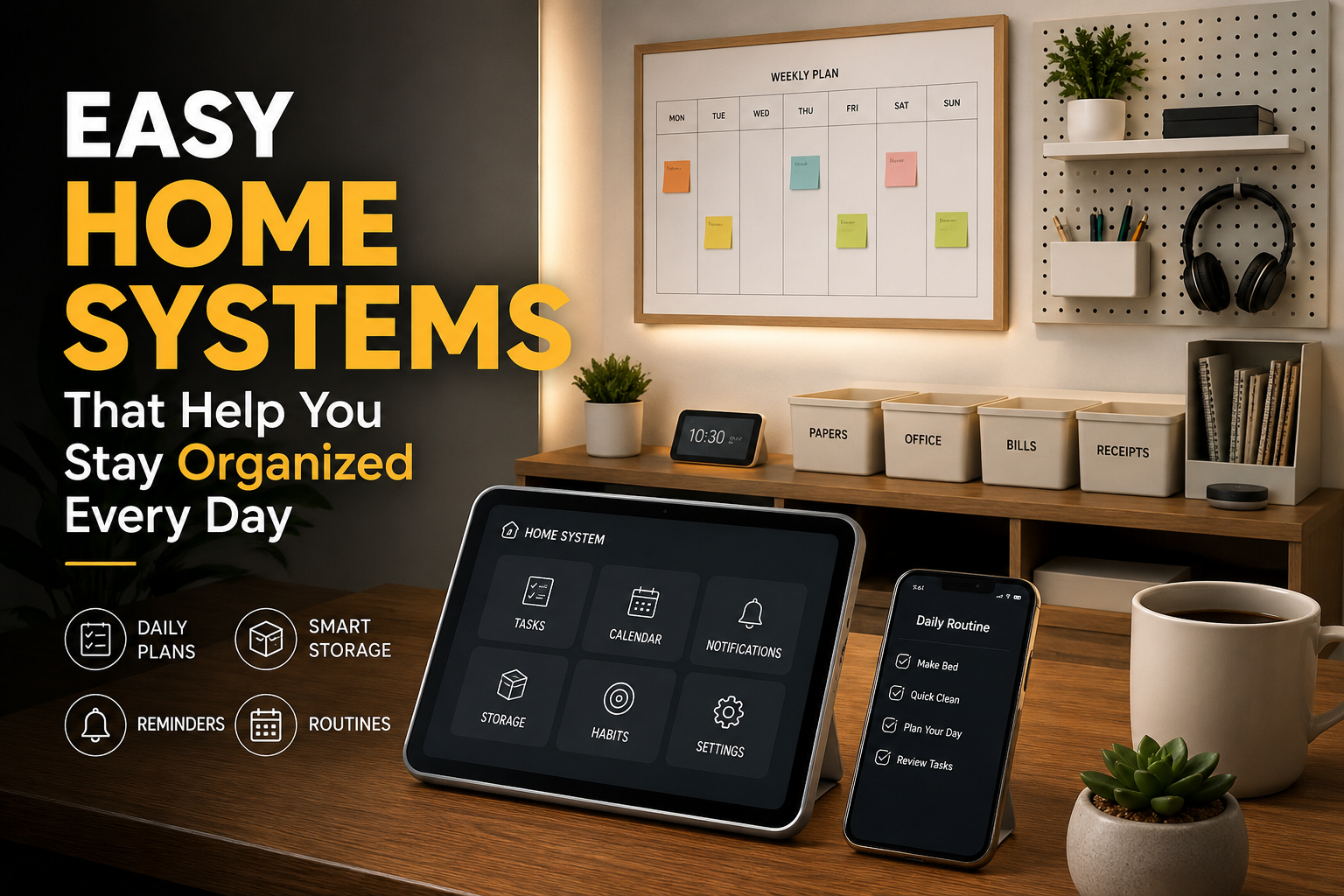
Easy Systems Make an Organized Home Easier to Maintain
A tidy home does not happen because people clean constantly. It happens when everyday belongings have logical places and simple routines make it easy to put things back.
Staying organized can feel difficult when home life is busy. Work, school, family responsibilities, errands, meals, laundry, appointments, and unexpected tasks can quickly fill the day. By the time everything else is finished, organizing the house may be the last thing anyone wants to think about.
The solution is not necessarily spending an entire weekend cleaning. A better approach is to create simple home systems that work in the background. When frequently used items have designated places and small routines become automatic, maintaining an organized home requires much less effort.
These systems can work in apartments, townhomes, suburban houses, and larger family homes across the United States. You do not need expensive custom cabinetry or a professional organizer. The goal is to create practical systems that match the way your household already lives.
Make the right action easier than the messy action. If putting something away takes only a few seconds, people are much more likely to do it consistently.
1. Create a Home for Everyday Essentials
One of the simplest organization systems is also one of the most effective: give frequently used belongings a permanent home.
Think about keys, wallets, sunglasses, bags, shoes, chargers, mail, and other items that seem to move around the house. When these things do not have a designated location, they naturally end up on countertops, tables, chairs, and other convenient surfaces.
A small tray near the entrance can hold keys and wallets. Hooks can hold bags and jackets. A shoe rack can keep footwear contained. These solutions do not need to be expensive. What matters is that everyone knows where things belong.
Whenever you naturally put something down, create a nearby place where that item can stay. Organization becomes easier when storage follows your habits instead of fighting them.
2. Build a Simple Entryway Routine
The entrance of your home can either stop clutter from spreading or become the place where clutter begins. A simple entryway system can make a noticeable difference.
Choose a specific location for shoes, jackets, bags, umbrellas, keys, and incoming mail. If you have children, consider giving each child a designated hook or basket for their everyday belongings.
The objective is not to create a showroom-style entrance. It is to make coming home and leaving home easier.
3. Use the “One Place” Rule for Important Items
Some household items cause unnecessary stress because they are constantly being misplaced. Important documents, spare keys, passports, warranties, medical paperwork, appliance manuals, and other essential records should have clearly defined storage locations.
A dedicated file box, cabinet, or secure document organizer can keep important papers together. The exact storage solution depends on your household, but the principle is simple: important things should not be scattered throughout the home.
For sensitive documents, use appropriate secure storage and avoid leaving them in visible or easily accessible areas.
4. Create a Laundry System That Matches Your Routine
Laundry can become overwhelming when washing, drying, folding, and putting clothes away are treated as one huge task.
Break the process into manageable steps. Keep hampers where clothes are actually removed. Separate laundry according to whatever categories make sense for your household. Choose regular laundry days or smaller loads depending on your schedule.
Most importantly, create a realistic system for putting clean clothing away. Clean laundry sitting in baskets for days is not really an organization system; it is simply delayed work.
Keep hampers convenient and easy to use.
Use a schedule that fits your household.
Finish the process instead of creating another pile.
5. Make the Kitchen Self-Explanatory
A good kitchen organization system should allow someone to find common items without opening every cabinet.
Group items according to how they are used. Keep everyday plates and glasses together. Store cooking utensils near the areas where food preparation happens. Keep coffee or breakfast supplies in a convenient location if those are part of your morning routine.
When several items are always used together, storing them together can save time and make cleanup easier.
6. Create a Weekly Kitchen Reset
The kitchen is one of the busiest rooms in many homes, so a small weekly reset can prevent clutter from becoming overwhelming.
Check the refrigerator for food that needs to be used. Review pantry items. Wipe the main work surfaces. Return items that have migrated to the wrong cabinets. Refill frequently used supplies when necessary.
This does not have to become a major cleaning session. A short, consistent review can keep the kitchen functional throughout the week.
7. Establish a Paperwork Station
Mail and paperwork can quickly take over kitchen counters and dining tables. Creating one dedicated location for incoming documents can stop that cycle.
Use a tray, file holder, or small cabinet to separate items that require action from documents that simply need filing or recycling.
Do not let the paperwork station become a permanent pile. Schedule a regular time to process it so documents do not accumulate indefinitely.
One Place for Incoming Paper
The goal is not to process every document immediately. The goal is to prevent important papers from being scattered across several rooms.
8. Give Cleaning Supplies a Logical Home
Cleaning becomes easier when supplies are stored close to where they are used. Bathroom products can stay in an appropriate bathroom storage area, while kitchen cleaning supplies can be kept near the kitchen if safe storage is possible.
For homes with children or pets, cleaning products should always be stored safely according to their labels and away from those who should not access them.
A small cleaning caddy can also make it easier to carry supplies between rooms when needed.
9. Use Baskets as “Return Stations”
Baskets can be useful for items that regularly travel around the home. A living room basket might collect blankets and pillows. A family basket could temporarily hold belongings that need to return to another room.
The important part is to empty these baskets regularly. Otherwise, they can become hidden clutter containers.
Think of them as temporary transportation systems rather than permanent storage.
10. Create a Bedroom Reset System
A bedroom can usually be reset quickly when clothing, personal items, and bedding each have clear routines.
Make the bed if that helps you start the day with a cleaner-looking room. Put dirty clothes directly into the hamper. Return shoes and accessories to their designated areas. Keep the nightstand limited to useful items.
At night, take a minute to clear anything that does not belong in the bedroom. This small routine can prevent the room from becoming a storage area for the entire household.
11. Build a Digital Organization System Too
Home organization is not limited to physical belongings. Digital clutter can also make everyday life harder.
Keep important digital documents in clearly named folders. Organize photos periodically. Remove unnecessary downloads and old files when appropriate.
A simple naming system can make it much easier to find documents later. Instead of creating dozens of complicated folders, choose a structure that makes sense to you and use it consistently.
12. Create a Charging Station
Phones, tablets, watches, headphones, and other electronics can create cable clutter throughout a home.
A designated charging area can keep frequently used electronics and cables together. It could be a section of a desk, a small shelf, or an appropriate drawer with safe cable management.
Keep only the chargers you actually use regularly in the main charging area. Store spare cables separately so the everyday setup stays simple.
13. Use Vertical Storage Where It Makes Sense
Walls can provide valuable storage without taking up much floor space. Hooks, shelves, pegboards, and wall-mounted solutions can help organize appropriate items in kitchens, offices, garages, bedrooms, and utility areas.
Before installing anything, make sure the mounting method is suitable for the wall and the weight of the items. Safety should always come before convenience.
14. Create a Five-Minute Evening Reset
You do not need an hour-long cleaning routine every evening. A short reset can be enough to prevent everyday clutter from accumulating.
Walk through the main living areas. Return obvious misplaced items. Put dishes where they belong. Clear one or two important surfaces. Straighten cushions and blankets. Prepare anything you will need the following morning.
Five minutes may not sound like much, but repeated every day it can significantly reduce the amount of work required later.
The 5-Minute Reset Checklist
✓ Return misplaced items
✓ Clear the main kitchen surface
✓ Put clothing in the right place
✓ Gather items that belong in another room
✓ Prepare one thing for tomorrow
15. Give Every Family Member a Role
An organized family home should not depend on one person doing everything. Simple responsibilities can be shared according to age and ability.
Children can put away toys, shoes, books, or laundry. Adults can handle household paperwork, schedules, and more complicated cleaning tasks.
The system works best when everyone understands where things belong and what their responsibilities are.
16. Make Storage Easy to Reach
One reason organization systems fail is that storage is inconvenient. If you have to move several objects before reaching the thing you use every day, you are unlikely to put it away consistently.
Keep frequently used items in accessible locations. Reserve higher shelves, deep cabinets, and less convenient storage areas for seasonal or rarely used belongings.
Organization should reduce effort rather than create additional steps.
17. Create a Seasonal Storage Routine
Many homes become crowded because seasonal items remain accessible all year. Depending on your climate and household needs, consider rotating items that are only used during certain parts of the year.
Seasonal clothing, holiday decorations, outdoor equipment, and other occasional belongings can be stored in clearly labeled containers when appropriate.
Before storing anything, make sure it is clean and dry and use storage methods suitable for the item.
18. Have a “No Pile” Rule for Important Surfaces
Some surfaces naturally attract clutter. Dining tables, desks, kitchen counters, and entryway furniture can become unofficial storage areas.
Choose one or two important surfaces and make a household rule that they should remain available for their intended purpose.
This does not mean the surface must remain completely empty. It simply prevents random objects from becoming permanent residents.
Keep enough workspace available for food preparation.
Avoid turning the table into permanent storage.
Keep the workspace ready for the next task.
19. Review Systems That Keep Failing
If a particular area becomes messy again and again, do not simply repeat the same cleanup. Ask why the system is failing.
Maybe the storage container is too small. Maybe the item is used too frequently for its current location. Maybe several family members are unsure where it belongs. Or perhaps there are simply too many items for the available space.
Change the system instead of blaming yourself. Good organization is flexible.
20. Keep Your Systems Simple Enough to Last
The best organization system is not the most complicated one. It is the one you can continue using when you are tired, busy, or having a difficult week.
If putting something away requires several steps, the system may be too complicated. Simplify it. If labels are useful, use them. If a basket works better than multiple small containers, use the basket.
Your home should serve your life, not become another project you constantly have to manage.
Consistency Is More Important Than Perfection
Every home gets messy. The goal is not to create a space that never needs cleaning. The goal is to create systems that make it easy to recover when life gets busy. A home that can return to order quickly is much more useful than one that only looks perfect after a major cleaning session.
Frequently Asked Questions
What is the easiest home organization system to start with?
Start by giving frequently used items a permanent home. Keys, shoes, bags, mail, chargers, and everyday household items are good places to begin because organizing them can immediately reduce visible clutter.
How can I stay organized when I am very busy?
Use short routines rather than large cleaning sessions. A five-minute evening reset, simple storage zones, and convenient drop areas can make organization much easier to maintain during busy weeks.
How do I organize a family home?
Create simple systems that everyone can understand. Assign designated places for shoes, bags, paperwork, toys, laundry, and everyday belongings, and involve family members in age-appropriate responsibilities.
Do I need expensive storage products?
No. Many organization problems can be solved by decluttering, rearranging existing furniture, using boxes or baskets you already own, and creating better routines. Buy storage products only when they solve a specific problem.
What should I do when an organization system stops working?
Look for the reason it keeps failing. The storage may be inconvenient, too small, too far away, or difficult for family members to understand. Adjust the system instead of repeatedly cleaning the same area.
Build a Home That Organizes Itself a Little Easier
A truly useful organization system does not depend on constant motivation. It works because the right places, routines, and storage solutions make everyday actions easier.
Start small. Give important belongings permanent homes, create practical drop zones, simplify laundry and paperwork, organize the kitchen around your routines, and introduce a short daily reset. Over time, these small systems can make your home easier to maintain and give you more time to focus on the things that actually matter.