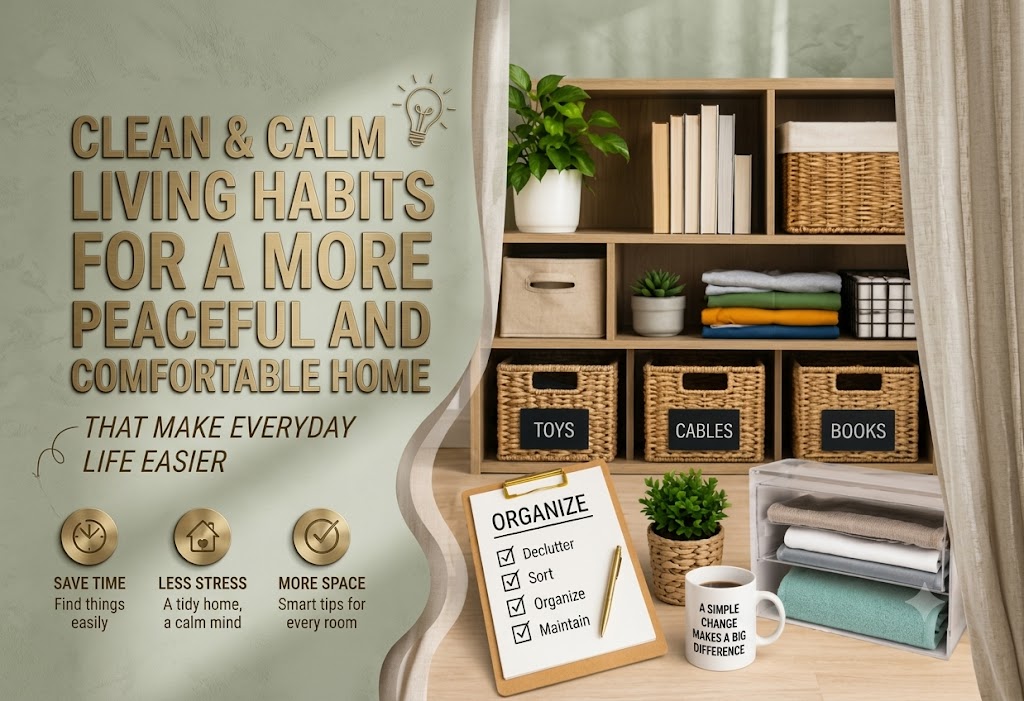
Peaceful Home • Everyday Living
A peaceful home is rarely created through one major cleaning session. It usually develops through small habits that reduce visual clutter, make daily tasks easier, and help every room feel more comfortable to live in.
Home is often the place where people expect to rest, recharge, and spend time away from the demands of the outside world. However, when rooms are constantly cluttered, unfinished tasks remain visible, and everyday belongings have no clear place, even a comfortable home can start to feel stressful.
Creating a calmer environment does not mean keeping everything perfectly clean all the time. Real homes are used, and everyday life naturally creates a certain amount of mess. The goal is to develop simple habits that prevent small problems from becoming overwhelming.
A clean and peaceful home is often the result of consistency rather than perfection. Spending a few minutes putting things back, clearing a surface, or preparing for the next day can reduce the amount of work that builds up later. These habits also help create a space that feels easier to manage.
Give Everyday Items a Simple Place to Belong
Many clutter problems begin because commonly used items do not have a regular place. Keys, chargers, bags, papers, shoes, and small accessories are often left wherever they were last used. Over time, these small items can make an entire room look disorganized.
Creating a home for frequently used belongings makes putting them away much easier. The storage location does not need to be complicated. A small tray near the entrance, a basket for accessories, or a dedicated drawer for household papers may be enough.
The best location is usually close to where the item is naturally used. When storage fits into a normal routine, it is more likely to remain useful over time.
“A calmer home often begins when putting something away becomes easier than leaving it out.”
HABIT 02
Reset Small Areas Before the Day Ends
A complete home cleaning session every evening is not necessary. A short reset can often be enough to prevent clutter from carrying into the next day. This may include clearing the coffee table, putting away clothes, washing a few dishes, or returning items to their usual places.
Small resets are useful because mess tends to grow when it is ignored. One item on a chair can become several. A few dishes can become a larger pile. A quick routine helps keep everyday tasks manageable.
It can also create a more pleasant start to the morning. Waking up to a reasonably organized room may feel much less stressful than beginning the day with yesterday’s unfinished mess.
Kitchen Reset
Clear dishes, wipe the main surface, and return frequently used items to their place.
Living Space Reset
Fold blankets, remove unnecessary items, and prepare the room for the next day.
Bedroom Reset
Put away clothes, clear the bedside area, and create a more restful environment.
Reduce Visual Noise in Frequently Used Rooms
Visual clutter can make a room feel busy even when it is technically clean. Too many objects on open surfaces, crowded shelves, and unused items in visible areas can create a sense of disorder.
This does not mean a home should look empty. Personal items, photographs, books, and decorative pieces can make a space feel warm and individual. The difference is whether they are displayed intentionally or simply left without a clear purpose.
Try This Simple Surface Rule
Choose a few surfaces that should remain mostly clear. This could be the dining table, a kitchen counter, a desk, or a bedside table. Keeping even a small number of areas visually open can make the whole room feel calmer.
Build Cleaning Into Normal Daily Movement
Cleaning can feel overwhelming when it is treated as one large task that must happen all at once. A more comfortable approach is to connect small cleaning actions with activities that already happen during the day.
For example, after preparing food, clean the main work area before leaving the kitchen. After changing clothes, put them where they belong instead of placing them on a chair. After finishing work at a desk, return a few items before walking away.
These small actions take little time individually. Over several days, however, they can greatly reduce the amount of cleaning required later.
Five Habits That Support a Cleaner and Calmer Home
“`A quick task often takes more effort later if it is repeatedly postponed.
Simple access makes quick cleaning more likely to happen.
The fewer random objects that move around the home, the easier they are to manage.
A drawer or cabinet becomes less useful when it is filled with forgotten items.
A home should support real life, not create pressure to maintain an impossible standard.
Create a More Peaceful Bedroom Routine
The bedroom often has a strong influence on how restful the home feels. It is easy for this space to become a temporary storage area for clothing, electronics, paperwork, and other items from the day.
A calmer bedroom routine can include making the bed, keeping frequently used items organized, and removing things that do not need to remain in the room. Soft lighting and reduced visual clutter may also help the space feel more comfortable during the evening.
The goal is not to create a perfectly styled room every day. It is simply to maintain an environment that feels easier to return to when the day is over.
Morning
Open the room, make the bed if it fits your routine, and return a few items before beginning the day.
Evening
Take a few minutes to reset the space so the room feels calmer when it is time to rest.
Make Comfort Part of the Organization Process
Organization is not only about storing more items. It is also about making a home comfortable to use. A room that is technically organized but inconvenient may not stay organized for long.
Consider the everyday experience of each room. Are frequently used items difficult to reach? Is there enough space to move comfortably? Are there areas where clutter always returns? These questions can help reveal where a small adjustment may improve the entire routine.
A Better Way to Think About Home Care
Peaceful living does not come from constantly cleaning. It comes from creating habits that make mess easier to manage before it becomes overwhelming.
Start with one small routine that feels realistic. Clear one surface, create a better place for a frequently misplaced item, or spend a few minutes resetting one room. Small, repeatable habits can gradually make the entire home feel cleaner, calmer, and more comfortable without turning daily life into a constant cleaning project.