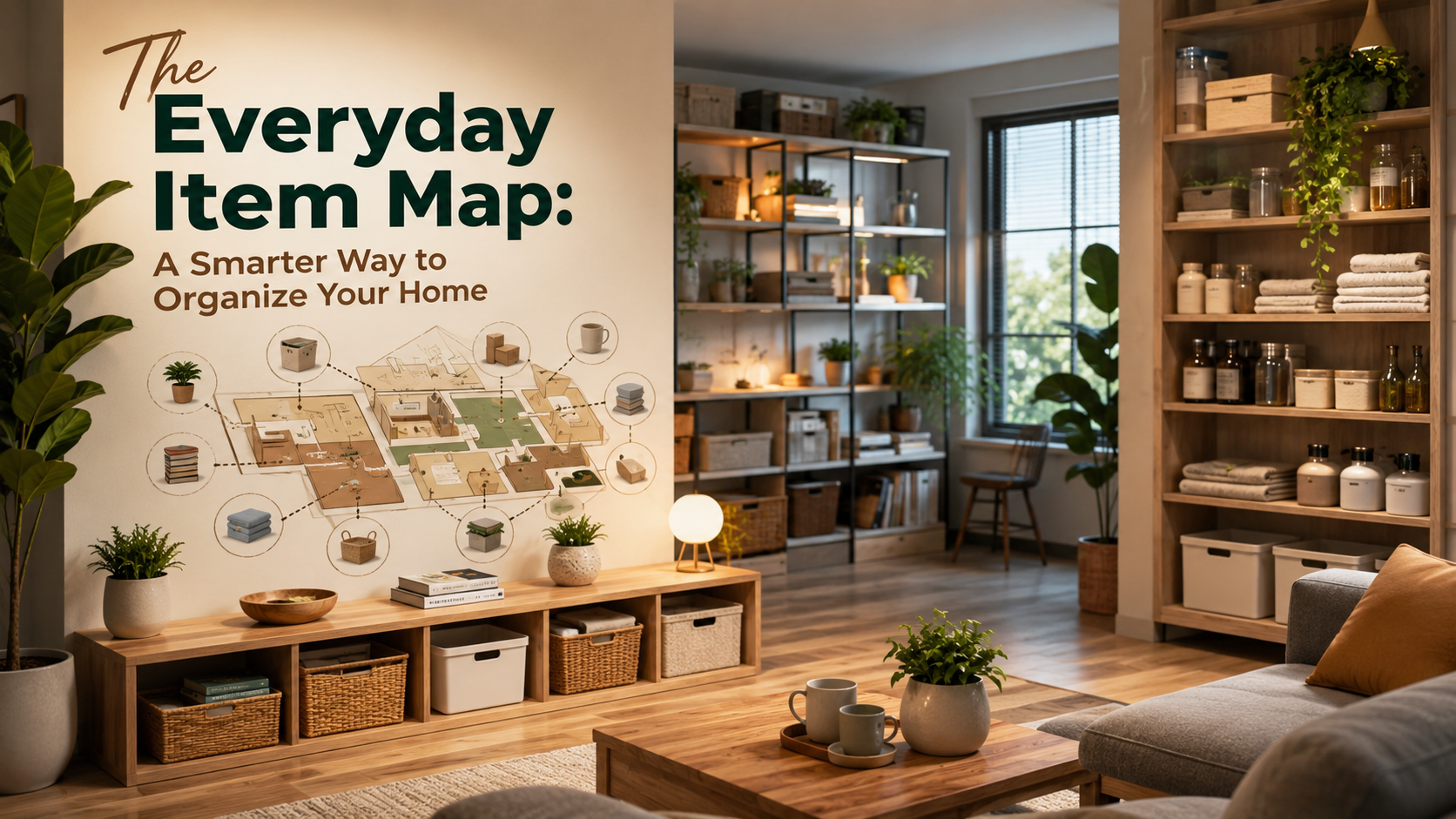
Finding everyday items should never feel like a treasure hunt. Creating an everyday item map helps every object in your home have a logical place, making daily routines faster, reducing clutter, and keeping every room organized with less effort.
Why an Everyday Item Map Works
An everyday item map is a practical organization system that assigns permanent locations to the items you use most often. Instead of storing things wherever there is space, you organize them based on how frequently and where they are used. This simple strategy reduces wasted time and makes it easier for everyone in the household to keep the home tidy.
When every family member knows where items belong, cleaning up becomes much faster and daily routines feel more organized.
The Biggest Benefits
An organized item map saves time, minimizes clutter, reduces duplicate purchases, improves household efficiency, and makes cleaning easier because everything has a designated home.
Identify Your Most Frequently Used Items
Begin by observing what you reach for every day. Focus on practical household essentials before organizing seasonal or rarely used belongings.
Kitchen Essentials
Store cooking utensils, reusable containers, coffee supplies, and frequently used dishes within easy reach.
Living Room Necessities
Create convenient storage for remote controls, chargers, blankets, books, and family games.
Bedroom Basics
Keep clothing, accessories, laundry baskets, and bedtime essentials in consistent locations.
Create Logical Storage Zones
Instead of organizing by category alone, organize by where each item is used. This approach reduces unnecessary walking and helps maintain order naturally.
| Home Area | Everyday Items | Suggested Storage |
|---|---|---|
| Entryway | Keys, wallet, sunglasses | Tray or wall organizer |
| Kitchen | Cooking tools, spices | Drawer organizers |
| Bathroom | Toiletries, towels | Shelves or baskets |
| Bedroom | Daily clothing, accessories | Closet sections |
| Living Room | Electronics, books | Cabinets or storage baskets |
Build Your Everyday Item Map Step by Step
Step 1
Walk through every room and list the items you use almost every day.
Step 2
Remove unnecessary duplicates and items you no longer need.
Step 3
Assign one permanent location for each frequently used item.
Step 4
Use containers, trays, dividers, or baskets to keep similar items together.
Step 5
Review your organization every month and make small improvements as your routines change.
Common Mistakes to Avoid
- Creating storage spaces that are difficult to access.
- Keeping duplicate everyday items without a purpose.
- Organizing based on appearance instead of convenience.
- Buying storage bins before decluttering.
- Changing storage locations too frequently.
Quick Organization Checklist
- Assign a permanent place for daily essentials.
- Keep similar items together.
- Label storage if multiple people share the home.
- Return items after every use.
- Review clutter once each week.
- Donate unused household items regularly.
- Keep walkways and countertops clear.
- Adjust storage as family needs change.
Maintain Your System Without Extra Work
The best organization systems are easy to maintain. Spend a few minutes each evening returning items to their assigned places. Small daily habits prevent clutter from building and make deep cleaning much easier.
Remember that an item map is flexible. As your lifestyle changes, update storage locations to keep your home practical and efficient.
Helpful Resource: National Park Service – Pack Smart Tips
Frequently Asked Questions
What is an everyday item map?
It is a simple organization method where every frequently used item has a permanent, logical storage location.
Should every family member follow the same system?
Yes. Shared organization works best when everyone knows where items belong and returns them after use.
Do I need expensive storage products?
No. Many effective organization systems use baskets, trays, shelves, or containers you already own.
How often should I update my item map?
Review it every few months or whenever your household routines change significantly.
Conclusion
An everyday item map creates a home that is easier to manage, cleaner to maintain, and less stressful to live in. By giving each frequently used item a permanent location and keeping storage simple, you can spend less time searching for things and more time enjoying an organized living space. Small adjustments today can lead to lasting organization for years to come.