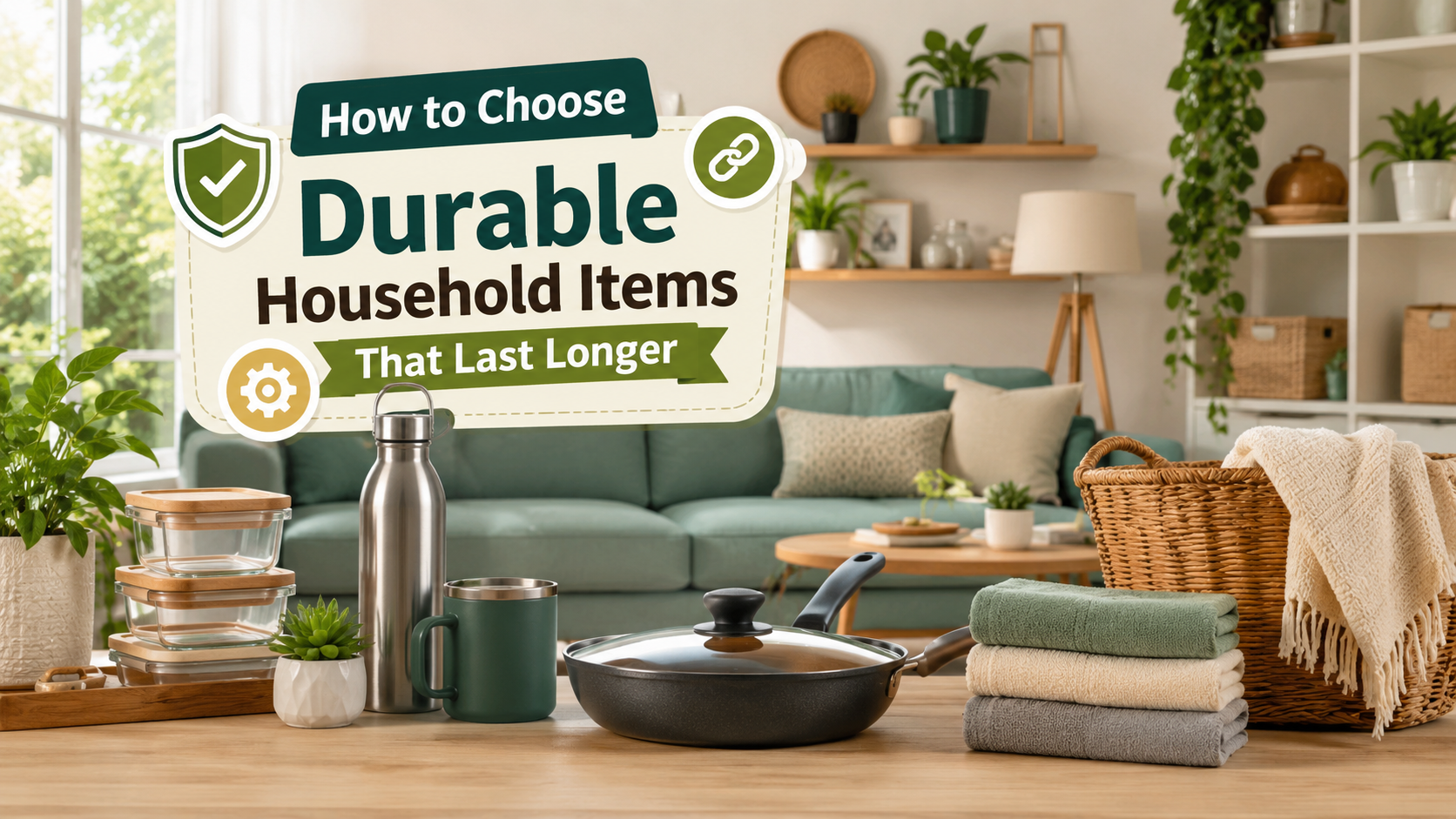
Choosing durable household items is one of the smartest ways to save money, reduce waste, and simplify daily life. Instead of replacing products every few months, investing in well-made essentials helps create a home that is easier to maintain and more enjoyable to live in. Durability isn’t always about buying the most expensive option—it is about selecting products designed to perform reliably for years while meeting your everyday needs.
Why Durability Should Be Your First Priority
Many household purchases are made because of attractive prices or trendy designs rather than long-term value. While inexpensive products may appear to save money initially, frequent replacements often cost more over time. Durable items reduce shopping trips, minimize waste, and provide consistent performance for years.
A thoughtful purchase also means fewer broken items, less clutter, and reduced frustration. Whether you are buying kitchen tools, furniture, storage containers, bedding, or cleaning equipment, considering quality before price can make everyday life much easier.
When you focus on longevity instead of short-term savings, your home naturally becomes more organized because you spend less time replacing damaged or worn-out belongings.
How to Evaluate Household Products Before Buying
Check Material Quality
Solid wood, stainless steel, tempered glass, heavy-duty fabrics, and strong metals generally last much longer than thin plastic or lightweight materials.
Look at Construction
Pay attention to sturdy joints, reinforced handles, quality stitching, smooth finishes, and reliable hardware rather than appearance alone.
Think About Everyday Use
Choose products that match how frequently they will be used. High-use items deserve better quality because they experience more wear.
Consider Maintenance
Durable products should also be easy to clean, maintain, and repair if necessary.
Read Product Information Carefully
Look for warranty information, care instructions, and replacement parts that indicate long-term manufacturer support.
Characteristics of Long-Lasting Household Items
Reliable Materials
Products made from durable materials generally resist daily wear more effectively.
Simple Design
Fewer moving parts often mean fewer opportunities for mechanical failure.
Repairable Construction
Items that can be repaired instead of replaced usually provide better long-term value.
Timeless Appearance
Neutral designs stay attractive longer than products based on temporary trends.
Multi-Purpose Function
Versatile products reduce unnecessary purchases and save storage space.
Comfortable Daily Use
Practical products that are enjoyable to use are more likely to remain useful for years.
Durability Comparison Guide
| Household Item | Better Choice | Main Advantage |
|---|---|---|
| Cookware | Stainless Steel | Long service life |
| Food Storage | Glass Containers | Reusable & stain resistant |
| Furniture | Solid Wood | Easy to maintain |
| Cleaning Tools | Replaceable Parts | Lower long-term cost |
| Laundry Basket | Heavy-Duty Plastic or Metal | Handles repeated use |
| Kitchen Utensils | Metal or Silicone | Heat resistant |
Frequently Asked Questions
No. The best value comes from products with durable materials, solid construction, and reliable performance rather than simply a higher price.
Buy quality products, maintain them properly, and choose designs intended for long-term everyday use.
No. Replace items gradually as they wear out and prioritize products that are used most often.
Yes. Longer-lasting products reduce the number of discarded items and the need for frequent replacements.
Helpful Tip
Before buying any household item, ask yourself three questions:
- Will I use it regularly?
- Can it last for several years?
- Can it be repaired if something wears out?
If the answer to all three is “yes,” it is probably a worthwhile purchase.
Smart Buying Checklist
- ✔ Compare materials carefully
- ✔ Check build quality
- ✔ Read care instructions
- ✔ Review warranty details
- ✔ Measure available space
- ✔ Buy only when necessary
- ✔ Choose timeless designs
- ✔ Prioritize function over trends
Common Buying Mistakes
- Choosing the cheapest option without comparing quality.
- Buying trendy products instead of practical ones.
- Ignoring maintenance requirements.
- Purchasing duplicates because existing items are disorganized.
- Replacing repairable products unnecessarily.
Long-Term Benefits
✓ Lower replacement costs
✓ Less household clutter
✓ Reduced environmental waste
✓ Better daily performance
✓ More organized storage
✓ Greater overall value
Helpful Resource: U.S. Department of Energy – Choosing Efficient Household Products