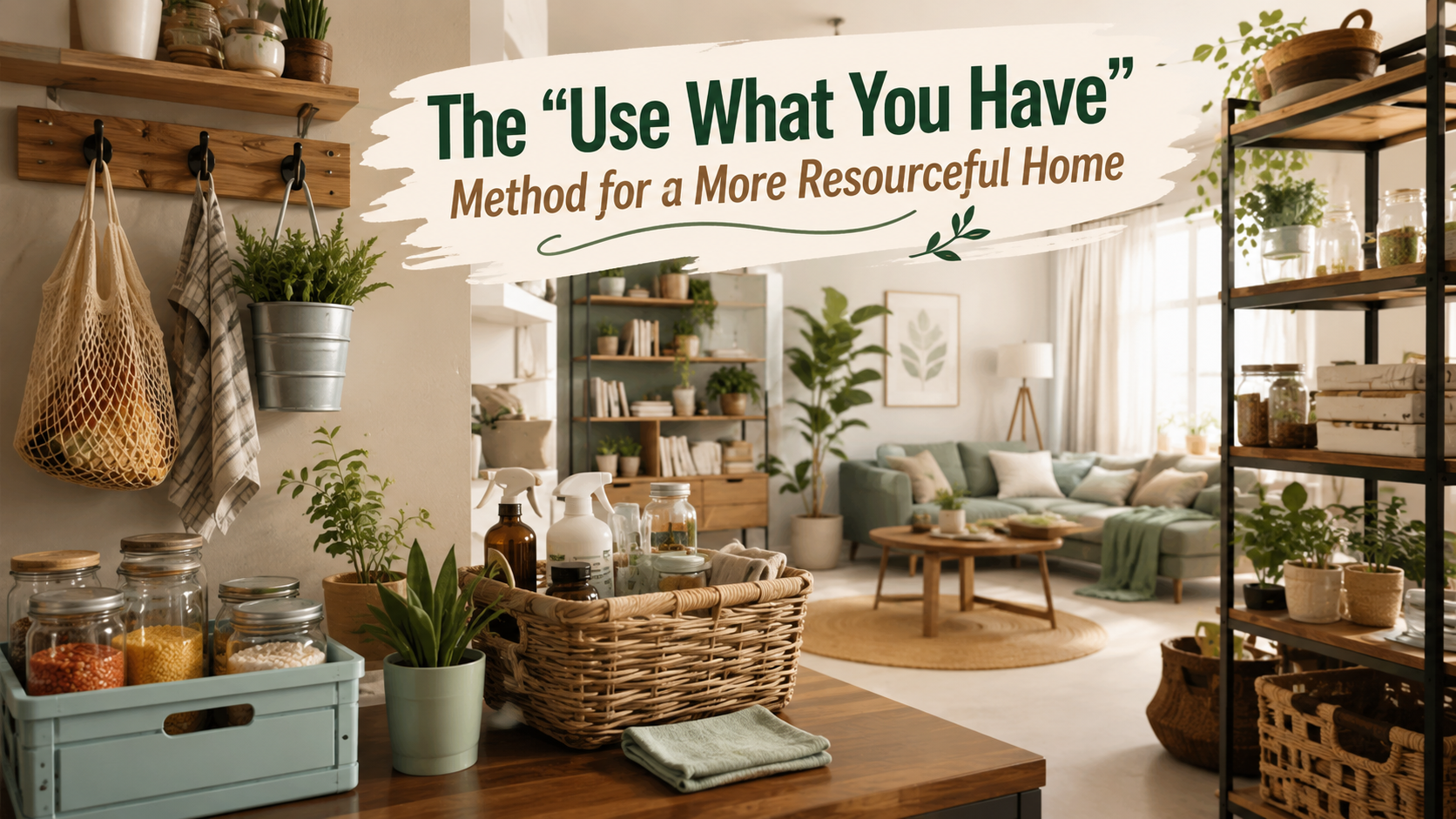
Creating a resourceful home isn’t about constantly buying better storage solutions or replacing perfectly useful items. It’s about learning to recognize the value of what you already own, making thoughtful decisions, and using everyday resources more intentionally. Small changes in mindset can reduce clutter, save money, and make your home feel more organized without purchasing anything new.
What Is the “Use What You Have” Method?
The “Use What You Have” method encourages making full use of existing household items before purchasing replacements or additional products. Instead of automatically shopping for organizational tools, kitchen gadgets, decorations, or cleaning supplies, you first evaluate what is already available in your home.
This approach helps prevent duplicate purchases while encouraging creativity and mindful consumption. It also reduces waste by extending the useful life of everyday belongings.
Core Principles
Finish what you own.
Fix before replacing.
Find new purposes.
Buy only when needed.
Simple Ways to Practice This Method
Shop Your Home First
Look through closets, cabinets, and storage before buying anything new.
Finish Consumables
Use existing cleaning products, pantry foods, and toiletries before opening new ones.
Repurpose Containers
Glass jars, baskets, and boxes often provide excellent storage without extra cost.
Rotate Decorations
Refresh rooms by rearranging existing décor instead of purchasing seasonal items.
Repair Small Problems
Loose handles, missing screws, and simple fixes can extend product life.
Borrow Occasionally
For rarely used tools, borrowing may be more practical than buying.
Weekly Resourceful Home Routine
| Day | Focus | Benefit |
|---|---|---|
| Monday | Review pantry | Reduce food waste |
| Tuesday | Organize storage | Rediscover useful items |
| Wednesday | Repair one item | Extend product life |
| Thursday | Use leftovers creatively | Save money |
| Friday | Delay unnecessary purchases | Reduce impulse buying |
Whenever you think you need to buy something, challenge yourself to spend five minutes looking around your home first. You may already own an item that works just as well.
Common Mistakes to Avoid
Buying for Convenience
Don’t assume a new product is the only solution to an everyday problem.
Ignoring Storage Areas
Many duplicate purchases happen because existing items are forgotten.
Keeping Broken Items Forever
Repair practical items promptly, but responsibly recycle those beyond repair.
Opening Multiple Products
Finish one bottle or package before starting another whenever possible.
Resourceful Living Checklist
Helpful Resource: U.S. Environmental Protection Agency – Reducing Waste at Home
Frequently Asked Questions
No. The goal is to buy thoughtfully after considering what you already have.
Yes. Fewer unnecessary purchases naturally mean fewer items entering your home.
Keep useful backups if appropriate, but consider donating extras that you don’t realistically need.
Absolutely. It encourages everyone to value resources and make intentional purchasing decisions.