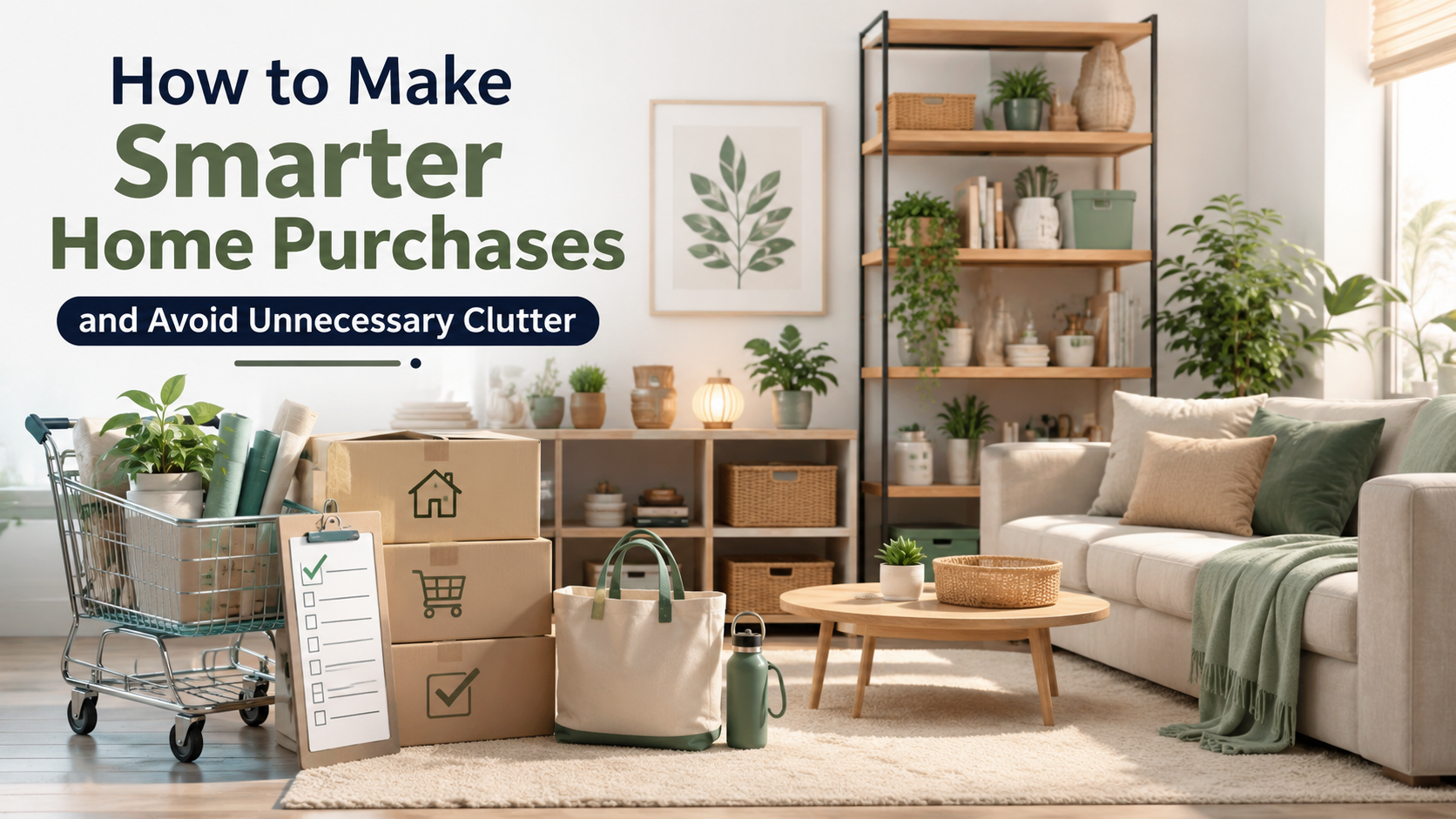
A well-organized home starts long before you begin cleaning or organizing shelves. Every purchase you make affects your available space, daily routines, and long-term comfort. Learning how to shop thoughtfully helps reduce clutter, save money, and create a home filled with items that truly add value to your everyday life.
Why Smarter Buying Matters
Many homes become crowded not because they lack storage, but because unnecessary items continue to accumulate over time. Attractive sales, online promotions, and impulse purchases often bring home products that are rarely used. Eventually, these items fill cabinets, closets, countertops, and storage bins, making organization more difficult.
Smarter purchasing is about slowing down before buying. When every item has a clear purpose, your home naturally stays cleaner, more functional, and easier to maintain.
Signs You’re Buying More Than You Need
Duplicate Products
Owning multiple versions of the same tool without a practical reason.
Storage Overflow
Closets and shelves remain full even after organizing.
Impulse Shopping
Purchasing because something is discounted rather than necessary.
Forgotten Items
Finding unopened or unused products months after buying them.
Step-by-Step Smarter Purchasing System
-
Identify the Need
Ask yourself what problem the item will solve and whether you already own something similar.
-
Wait Before Buying
Give yourself at least 24 hours before purchasing non-essential items. This helps reduce impulse decisions.
-
Measure Available Space
Always know where an item will be stored before bringing it home.
-
Choose Quality
Buying one durable product often costs less over time than replacing several cheaper alternatives.
-
Remove Before You Add
Whenever practical, donate or recycle one similar item before purchasing another.
Smart Purchase Checklist
| Question | If Yes | If No |
|---|---|---|
| Will I use it weekly? | Worth considering | Think again |
| Do I already own one? | Avoid duplicates | Continue evaluating |
| Do I have storage? | Proceed | Create space first |
| Is it good quality? | Better long-term value | Compare options |
| Will it reduce clutter? | Helpful purchase | Consider skipping |
Common Purchasing Mistakes
A lower price doesn’t automatically make an item necessary.
Every purchase should already have a designated place.
Several inexpensive items often create more clutter than one reliable product.
Lists help reduce unnecessary spending and duplicate purchases.
Weekly Home Buying Review
Helpful Resource: U.S. EPA – Reducing Waste: What You Can Do
Frequently Asked Questions
How can I avoid impulse buying?
Wait at least 24 hours before purchasing non-essential items and review your shopping list regularly.
Should I replace items only when they break?
Not always, but avoid replacing useful products simply because a newer version is available.
What is the biggest cause of household clutter?
Repeatedly bringing in items without removing or organizing existing belongings.
Does buying fewer items save money?
Thoughtful purchasing often reduces unnecessary spending while helping maintain a more organized home.