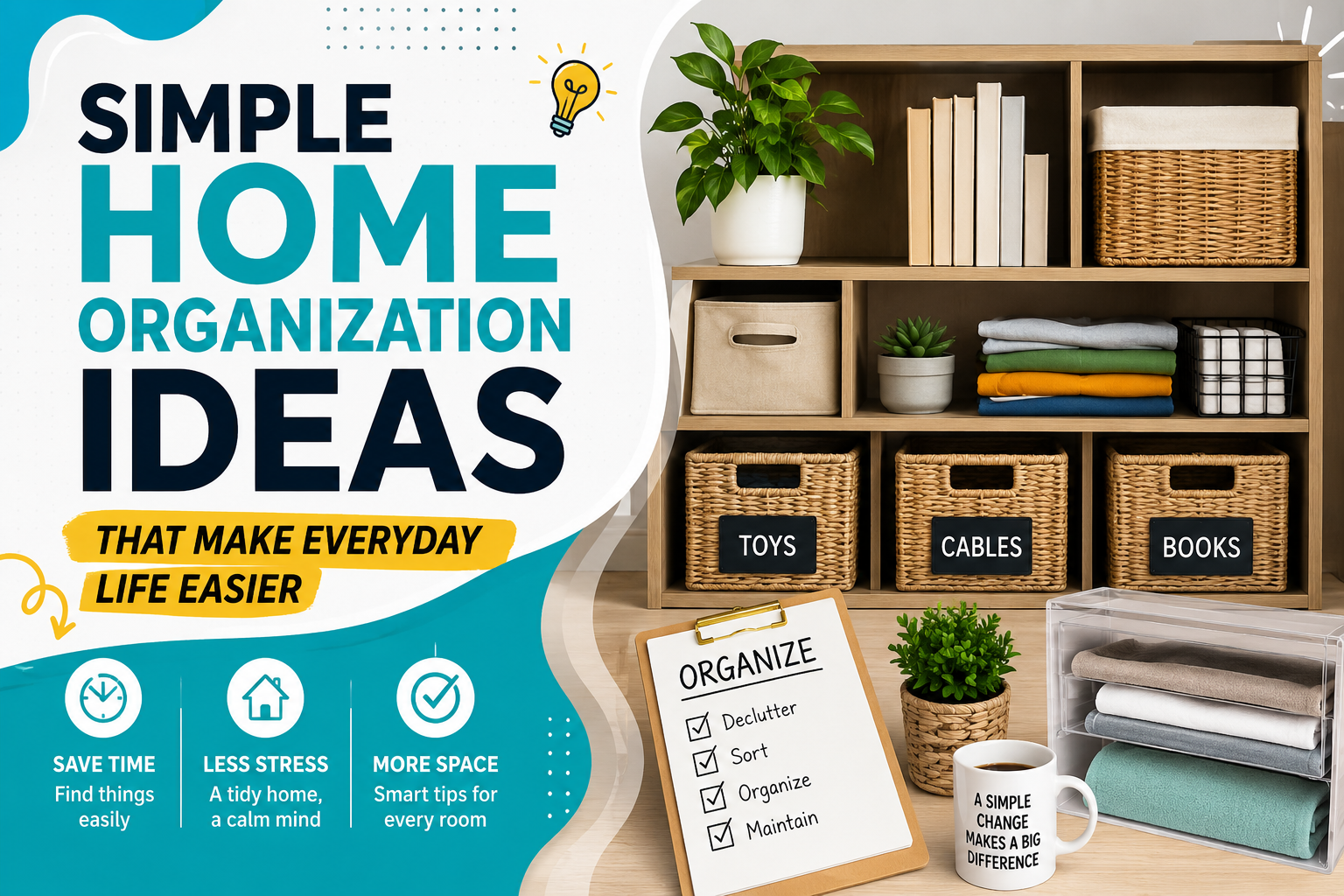
A well-organized home is not necessarily a perfectly decorated home. It is a home where everyday things are easy to find, easy to use, and easy to put away. With a few simple systems, even a busy household can feel calmer, cleaner, and easier to manage.
Home organization does not have to involve expensive furniture, complicated storage systems, or spending an entire weekend sorting every drawer. In many cases, the biggest improvements come from small changes that make everyday routines easier.
Whether you live in a small apartment, a suburban house, a townhouse, or a larger family home in the United States, clutter usually develops for the same basic reason: things do not have a convenient place to go. When keys land on the counter, shoes stay near the door, paperwork collects on the dining table, and clothes end up on a chair, the home can quickly feel disorganized.
The good news is that organization can be designed around real life. Instead of creating a complicated system that looks impressive for a week, focus on simple solutions that you and your family can maintain without thinking too much about them.
Keep the things you actually use and enjoy.
Make everyday items simple to store and retrieve.
Small resets prevent bigger messes later.
1. Start With the Areas You Use Most
One of the easiest mistakes to make when organizing a home is starting with a random closet or drawer. Instead, begin with the places that affect your everyday routine the most.
Think about where clutter naturally appears. Is the kitchen counter always covered with things? Does the entryway collect shoes and bags? Does the bathroom become crowded with personal-care products? Does paperwork constantly end up on the dining table?
These areas should be your first priority. Solving a problem you experience every day gives you a much bigger benefit than organizing a cabinet you rarely open.
What part of my home makes everyday life harder than it needs to be? Start there. Organization should improve your routine, not simply make a room look good.
2. Give Everything a Home
The most important organization principle is also one of the simplest: frequently used items need a specific place to live.
Keys can stay on a hook near the entrance. Mail can go into one tray. Remote controls can stay in a small basket. Shoes can have a designated rack. Everyday chargers can remain together in one drawer.
When an item does not have a home, it will usually end up wherever there happens to be empty space. That creates clutter almost automatically.
A good storage location should also be convenient. If something is used every morning, it should not be buried at the back of a difficult-to-reach cabinet.
3. Declutter Before Buying Organizers
It can be tempting to purchase baskets, boxes, drawer dividers, and shelves as soon as a room looks messy. But storage products cannot solve the problem if you simply have too many belongings.
Before buying anything, look through the area and remove items that are broken, duplicated, unused, or no longer useful. You may discover that you already have enough storage once unnecessary things are gone.
Work gradually rather than trying to declutter the entire house in one day. One drawer, shelf, or cabinet is enough to get started.
4. Create a Simple Entryway System
The entrance is one of the most important organization zones in a home because everyone passes through it. Without a system, shoes, jackets, backpacks, umbrellas, keys, packages, and mail can quickly pile up.
A simple entryway setup might include wall hooks, a narrow shoe rack, a small bench, and a tray for keys and other small items.
If you do not have a dedicated foyer, use a small section of wall near the front door. Even a few hooks can dramatically reduce the amount of clutter that travels into the rest of the house.
5. Keep Kitchen Counters Functional
A clean kitchen does not necessarily mean every appliance has to be hidden. The goal is to keep counters functional and prevent them from becoming a general storage area.
Keep the appliances you use frequently within easy reach. Store occasional-use appliances in cabinets or other appropriate storage areas.
Also create designated homes for everyday items such as cutting boards, cooking utensils, coffee supplies, and food containers. When these things have convenient locations, putting them away becomes much easier.
The Kitchen Counter Rule
If an item does not help with cooking, cleaning, or a daily kitchen routine, ask whether it really needs to live on the counter. Keeping open work surfaces available can make a kitchen feel cleaner immediately.
6. Organize Drawers by Category
Drawers can quickly become difficult to use when unrelated items are thrown together. Instead of creating a perfect system for every drawer, group items by function.
One drawer might hold cooking utensils, another might contain office supplies, and another could be dedicated to batteries and small household tools.
Simple dividers can help prevent smaller items from moving around, but you do not need a complicated organizer for every drawer. Sometimes a few clearly defined categories are enough.
7. Make Your Bedroom Easier to Maintain
Bedrooms often become cluttered when there is no convenient place for clothing and personal belongings. A chair can easily become an unofficial clothing storage area, while nightstands can become crowded with chargers, books, cups, and miscellaneous items.
Keep a laundry hamper where clothes naturally come off. Give worn-but-not-dirty clothing a specific place rather than leaving it on furniture.
Keep your nightstand limited to the things you actually need at night. A lamp, book, phone, and a few personal items may be enough.
8. Use Vertical Space
Walls are valuable organization space, especially in smaller rooms. Floating shelves, hooks, pegboards, tall bookcases, and wall-mounted cabinets can add storage without consuming much floor area.
Use vertical storage for items that are appropriate for the location. In an office, shelves can hold books and supplies. In a kitchen, wall racks can organize utensils. In a bedroom, hooks can hold bags and accessories.
Keep heavy or frequently used items at comfortable heights and place less frequently used belongings higher up.
9. Create a Paperwork Station
Paper clutter can make an otherwise clean home look disorganized. Bills, letters, receipts, school paperwork, documents, and packages can easily create piles on counters and tables.
Create one location for incoming paperwork. A small tray or file organizer can prevent documents from spreading around the home.
Review the paperwork regularly and sort it into appropriate categories such as action required, filing, recycling, or shredding. Important documents should be stored securely.
10. Use Baskets for Fast Cleanup
Baskets are particularly useful for busy households because they make it possible to gather similar items quickly. Instead of spending several minutes organizing every small object individually, you can group related belongings in one place.
A living room basket might hold blankets. A bathroom basket could hold extra toiletries. A bedroom basket might contain accessories or frequently used items.
Do not use baskets as a way to permanently hide random clutter. Each basket should have a clear purpose and should be easy to sort when necessary.
11. Take Advantage of Under-Bed Space
The space beneath the bed is often one of the easiest places to add hidden storage. Low containers can hold seasonal clothing, extra bedding, shoes, or other belongings that do not need to be accessed every day.
Use containers with lids when appropriate, especially if the area is exposed to dust. Labeling the containers can also save time when you need something later.
If you are purchasing a new bed, a model with built-in drawers can combine sleeping space with useful storage.
12. Make the Bathroom Easier to Reset
A bathroom can look messy even when it is clean simply because too many products are visible. Toothpaste, skincare, cosmetics, hair products, grooming tools, and cleaning supplies can quickly cover the counter.
Keep your everyday essentials accessible while storing backup products and occasional-use items inside cabinets or drawers.
A small tray can also group daily products together, making it easier to clear the counter when you need additional space.
13. Create a Dedicated Home for Electronics
Cables, chargers, headphones, adapters, and small electronics can become a surprisingly large source of clutter. Instead of keeping them in different rooms, create one designated electronics area.
A drawer, box, or small cabinet can work well. Separate frequently used items from spare cables and label unusual accessories when necessary.
A dedicated charging station can also prevent phones, tablets, and chargers from taking over kitchen counters, bedside tables, and desks.
14. Choose Multifunctional Furniture
Furniture that serves multiple purposes can make organization easier without requiring more floor space. A storage ottoman can provide seating and hold blankets. A bench can provide seating and shoe storage. A coffee table with hidden storage can hold books, remotes, and other living-room items.
This is especially helpful in apartments, smaller houses, and multipurpose rooms where every piece of furniture needs to earn its space.
15. Use the Back of Doors
The back of a door is often overlooked, but it can provide useful storage for lightweight items. Over-the-door organizers can be helpful in bedrooms, bathrooms, closets, pantries, and utility areas.
Depending on the location, you can use them for accessories, shoes, toiletries, cleaning supplies, craft materials, or small household items.
Always make sure the organizer is suitable for the door and does not interfere with the hinges, frame, or normal operation of the door.
Small Daily Resets Beat Weekend Cleaning Marathons
Before going to bed, walk through the main areas of your home and return misplaced items to their homes. Clear one or two visible surfaces, put away clothing, and handle obvious trash. A few minutes every day can prevent the kind of clutter that eventually requires hours to fix.
Simple Organization Habits for Busy Families
Organization becomes much easier when everyone who lives in the home understands the basic system. If one person creates an elaborate system that everyone else finds inconvenient, it probably will not last.
Keep the rules simple. Shoes go in one location. Mail goes in one place. Dirty laundry goes into the hamper. Toys return to their storage area. Kitchen items return to their cabinets after use.
Children can also participate in age-appropriate cleanup routines. Giving belongings clear homes makes it easier for everyone to contribute without needing constant reminders.
Make the bed, return bathroom items, and keep the kitchen reset after breakfast.
Handle mail, packages, and items that have moved away from their usual homes.
Clear surfaces, return belongings, and prepare the main areas for the next day.
How to Keep Your Organization System From Falling Apart
The best organization system is one that can survive busy days. Life will always create some clutter. The goal is not to prevent every single mess but to make recovery quick and simple.
If a storage system constantly becomes disorganized, do not blame yourself immediately. The system may simply be inconvenient. Maybe the storage location is too far away, the container is difficult to open, or there is not enough room for the items you are trying to store.
When that happens, adjust the system. Good organization should adapt to your habits rather than forcing you to completely change how you live.
Frequently Asked Questions
What is the easiest way to organize a home?
Start with the areas that create the most daily clutter. Remove unnecessary items, give frequently used belongings specific homes, and create simple routines for returning things to those locations.
How can I keep my house organized every day?
Use short daily resets instead of relying only on major cleaning sessions. Spending a few minutes returning items to their designated locations can prevent clutter from building up.
Should I organize one room at a time?
Yes. Focusing on one room, category, drawer, or problem area at a time makes the process less overwhelming. Complete a small area before moving to the next one.
What should I do if I do not have enough storage?
First declutter items you no longer need. Then consider vertical storage, under-bed storage, multifunctional furniture, door organizers, and other space-efficient solutions. Avoid buying storage before understanding exactly what needs to be stored.
How do I organize a busy family home?
Create simple systems that everyone can understand. Designate specific places for shoes, bags, mail, toys, laundry, and everyday belongings. The easier the system is to follow, the more likely everyone is to maintain it.
How often should I declutter?
A seasonal review can be helpful, but there is no universal schedule. Pay attention to areas that repeatedly become overcrowded and address them before they become difficult to manage.
Organization Should Make Life Easier
A well-organized home is not about perfection. It is about creating an environment where everyday tasks require less searching, less moving things around, and less time dealing with unnecessary clutter.
Start with one problem area and make one meaningful improvement. Give your everyday belongings convenient homes, remove what you no longer need, use storage intelligently, and build short daily reset habits. Over time, these simple changes can make your entire home feel calmer, cleaner, and much easier to live in.